

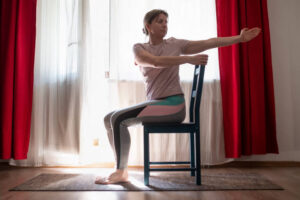
Living with multiple sclerosis can sometimes make traditional exercise challenging. Fatigue, balance difficulties, muscle stiffness, weakness or mobility changes may make getting onto a yoga mat feel like too much.
Seated yoga offers a gentle alternative. You can practice many yoga movements from a firm, supportive chair, making it easier to incorporate movement, stretching, breathing and relaxation into your day.
Why try seated yoga?
Gentle movement can help support mobility, flexibility, strength and overall wellbeing. Yoga also incorporates breathing, relaxation and mindfulness, which may help you feel more relaxed and connected to your body.
The MS Society UK notes that yoga may help with symptoms such as fatigue, pain, balance, walking and coordination, while gentle stretching may also help with muscle stiffness and flexibility.
The key is to work within your own abilities. Start gently, take breaks when needed and don’t push through pain or excessive fatigue.
🧘 Try this seated yoga session
We’ve included a gentle seated yoga video that you can follow from the comfort of your own chair.
Watch the Seated Yoga for MS video on YouTube
Before beginning, choose a sturdy chair with a solid back and place it on a stable surface. Make sure you have enough space around you to move safely.
For more information about staying active with MS, download the Moving More with MS booklet from the MS Society UK.
The guide includes information about different ways to stay active, including yoga and exercises that can be adapted to different abilities. The MS Society recommends starting with easier movements and gradually progressing, and suggests seated yoga as an option for people who may find standing or floor-based exercise difficult.
[Download the Moving More with MS booklet (PDF)]
Resource: MS Society UK – Moving More with MS (2024).
Remember: a little movement counts
You don’t have to complete a long workout to benefit from movement. On days when your MS symptoms or fatigue are more challenging, even a few gentle stretches or minutes of seated movement can be a positive step.
Listen to your body, move at your own pace and rest when you need to.
**Please note: This information is for general educational purposes and is not a substitute for personalised medical advice. If you are unsure whether a particular exercise is suitable for you, speak to your doctor, physiotherapist or occupational therapist before starting. Stop if you experience pain, dizziness, significant weakness or other concerning symptoms.**