
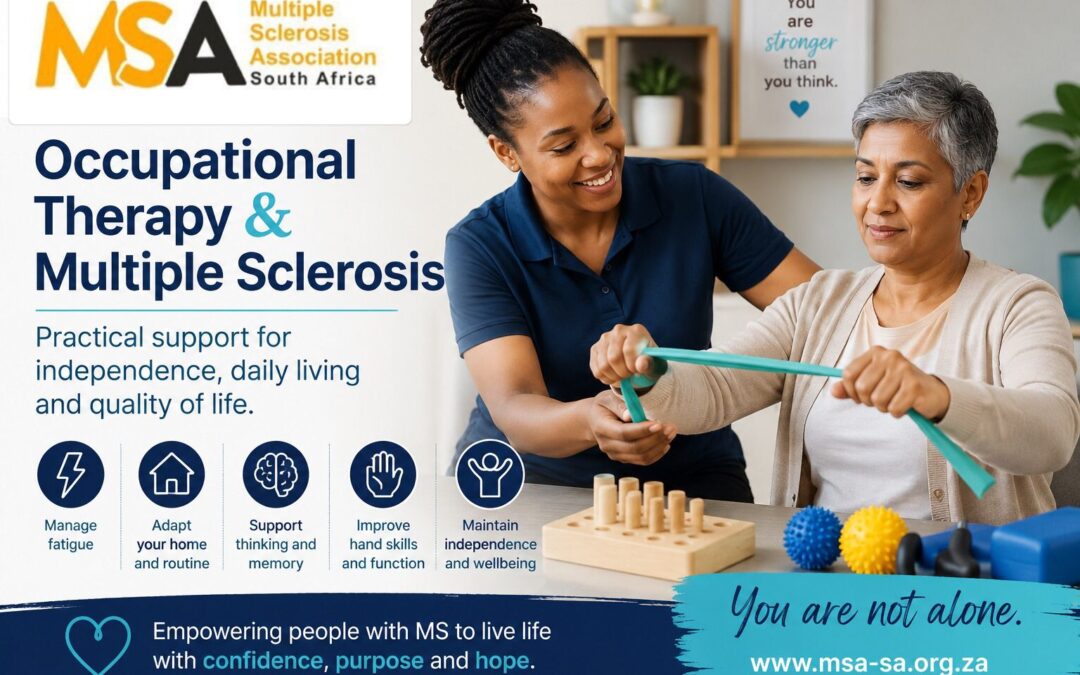
Living with multiple sclerosis (MS) can make everyday activities more challenging. Symptoms such as fatigue, muscle weakness, balance difficulties, numbness, poor coordination, and brain fog can affect a person’s independence and quality of life.
This is where occupational therapy can help.
Occupational therapists work with people living with MS to help them manage daily tasks more safely, comfortably, and independently. Rather than focusing only on exercise or mobility, occupational therapy helps people adapt to changes in their bodies and find practical ways to continue participating in everyday life.
An occupational therapist may assist with:
- Fatigue and energy conservation techniques
- Hand function and fine motor skills
- Memory and concentration strategies
- Home and workplace adaptations
- Mobility and fall prevention
- Daily activities such as dressing, cooking, bathing, and working
For many people with MS, small adjustments can make a significant difference in reducing exhaustion and improving independence. Occupational therapy may also help improve daily functioning and mental wellbeing in some individuals living with MS.
Occupational therapy is highly individualised, meaning support is tailored to each person’s symptoms, lifestyle, and personal goals.
If you or a loved one are living with MS and finding daily activities more difficult, speaking to your healthcare provider about occupational therapy may be beneficial.
To learn more about occupational therapy interventions for MS, read this helpful article from MultipleSclerosis.net:
Occupational Therapy Interventions for Multiple Sclerosis
